
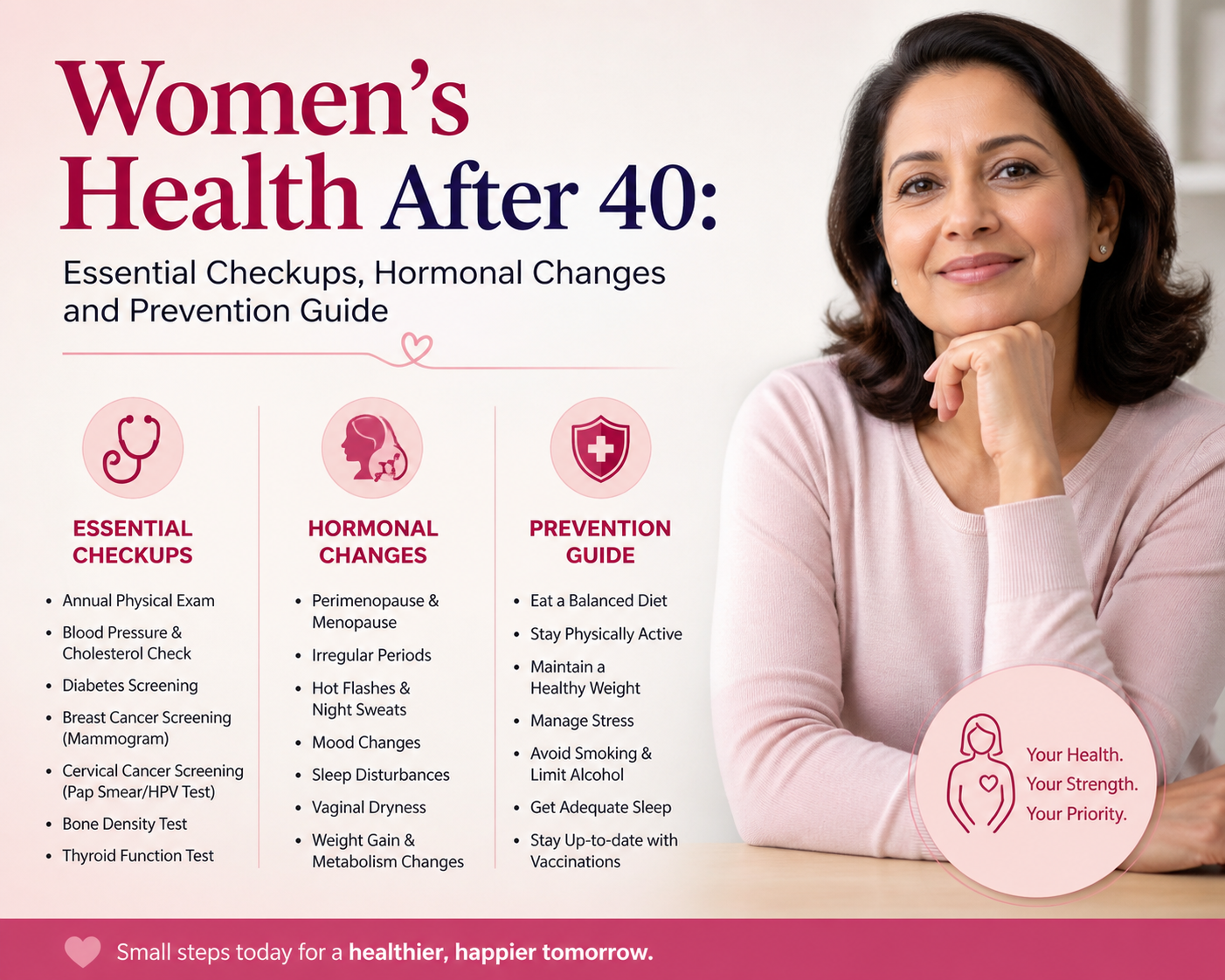
Women's Health After 40: Essential Checkups, Hormonal Changes and Prevention Guide
There are many women who hit 40 and notice something has shifted. Not dramatic but enough to feel different from before.
Energy levels feel different than they did before. Sleep does not feel as restoring as it once did. Weight that was never really a concern starts becoming harder to manage without any clear reason. All of this happens slowly and gradually, most women put it down to stress or just being too busy and keep pushing through without looking into it further.
That is where the problem starts. Because a lot of what feels like general tiredness or lifestyle issues is the body going through real hormonal changes. Knowing what those changes are, what to watch for, and which checkups matter in this decade makes a difference.
What Actually Changes After 40?
The body does not suddenly break down after 40. The hormones begin to change. Certain health risks go up and the body starts asking for a different kind of attention than it needed before.
Most women who catch these changes early and take action do significantly better in the years ahead. The ones who wait until something feels seriously wrong often find out that things had been building for a while already. That gap between early and late is what makes awareness so important.
Hormonal Changes After 40
Most of what women experience through their 40s has a hormonal connection behind it. Fatigue, mood shifts, weight changes, sleep problems, these do not always seem related at first but once it is understood that hormones are behind a lot of it, everything starts making more sense.
Estrogen levels start going down gradually through this decade. This does not happen suddenly, but the effects start showing up in different ways. Periods become irregular; a cycle that was predictable for years suddenly is not anymore. Sometimes it comes early, sometimes late, sometimes the flow is completely different from what it used to be. The body is adjusting, and this is part of that.
Sleep changes too; falling asleep takes longer. Waking up in the middle of the night becomes something that happens regularly. Most women blame stress for this. But hormones are behind a lot of them.
Mood shifts happen in this decade, and they catch many women off guard. More irritable than usual, anxious without a clear reason. Low on certain days without being able to explain why. This is connected to what is happening hormonally, and it is real, not imagined.
None of this means something is wrong. It is a normal part of this stage. But it does not have to be navigated without information or support, and that is the part most women do not realize.
Checkups That Should Not Be Skipped After 40
This is the part that gets delayed the most. Life stays busy and the habit of seeing a doctor only when something hurts does not serve women well in this decade.
Blood pressure is something that should be checked regularly. Most of the time high blood pressure shows no symptoms at all and many women only find out during a routine checkup. Not keeping track of it increases the risk of heart disease and stroke without even realizing it.
Blood sugar also needs more attention in this decade. The risk of diabetes goes up with age and finding it early, even before it fully develops, makes it much easier to handle. Waiting for symptoms to show up is not the right approach here.
Cholesterol should also be checked through a simple blood test. Heart disease risk increases for women after 40 and cholesterol is one of the key things to keep an eye on.
Bone density is something most women do not think about until something breaks. Estrogen plays a role in keeping bones strong and as it goes down, bones become weaker and the risk of osteoporosis goes up. A bone density scan is a good way to know where things stand before any damage happens.
Thyroid problems show up more in women and tend to surface after 40. Fatigue, weight shifts, mood changes, these can all trace back to the thyroid, and most people do not think to check. A blood test is all it takes.
Gynecological checkups do not stop being relevant after 40 either. Cervical cancer screening still matters, and a regular pelvic exam is not something to quietly drop from the list.
Breast cancer risk also climbs with age. After 40, a mammogram is something most doctors will bring up for exactly this reason. Catching anything early makes a big difference to how it can be treated and what happens after.
Eye checkups are easy to forget, but vision does change after 40, and the risk of conditions like glaucoma also increases. A regular eye exam is the best way to catch these things before they become serious.
Daily Habits That Matter More in This Decade
Checkups are one part of the picture. What happens in daily life is the other part and both matters equally.
After 40, staying active matters more. It does not have to be intense. Regular walking, some stretching, basic strength work, these add up more than most people expect. Bones hold better, weight is easier to manage, mood stays more even. The difference shows over time, not overnight.
Stress gets harder to absorb as the body gets older. It pulls at hormones, sleep, weight, immunity, all of it. The body simply does not handle it the same way it did before. Something that genuinely helps with stress, done regularly, is worth more in this decade than it ever was.
Alcohol and smoking carry bigger risks after 40. Heart disease, bone loss and certain cancers all become more likely with both. Cutting down or stopping is one of the more impactful things a woman can do for her health at this stage.
Mental Health Needs Attention Too
This part gets skipped over in most conversations about women's health after 40, and it should not be. The hormonal changes of perimenopause affect mood in ways that are very real.
Anxiety without an obvious cause. Days that feel heavier than they used to. Getting overwhelmed by things that were once manageable. These are not personality changes or signs of weakness. They are connected to what is happening in the body during this transition.
Understanding Perimenopause
Perimenopause is the phase that leads up to menopause, and it can start in the early 40s for many women and last for several years. Irregular periods usually come first. Other symptoms follow that, hot flashes, sleep disturbances, mood changes, lower energy throughout the day, vaginal dryness.
Not every woman deals with all of these and some move through this phase with far less disruption than others. But having some understanding of what perimenopause involves makes it much less confusing when these things do show up. A gynecologist can help with the symptoms. It does not have to be something a woman just quietly deals with on her own.
When to See a Doctor?
Periods becoming very irregular or heavier than usual is something a doctor should know about. Do not sit on it.
If there is unexplained weight change, tiredness that rest is not fixing, mood that feels off for no clear reason, or some new pain that keeps returning, these things should not be ignored. Getting checked early is always better than waiting to see how bad it gets.
To Sum It Up
Women's health after 40 is not about decline or things falling apart. The body is changing and that is completely normal. What matters is understanding those changes and giving the body the attention it needs during this time.
The women who stay informed, keep up with checkups, and do not ignore early signs give themselves a much better experience in the years ahead. It does not have to be complicated. It just needs to be taken seriously.
FAQs
1. Can lifestyle changes really make a difference to women's health after 40?
Yes, eating better, walking regularly, sleeping on time, managing stress, small things add up. The body responds well when it gets the right attention at this stage.
2. Which checkups are most important for women after 40?
There are quite a few important ones. Blood pressure, blood sugar, thyroid, and bone density should be checked regularly. Mammogram and pap smear are also something women should not skip.
3. What is perimenopause and when does it start?
Perimenopause is the phase where periods go irregular, mood shifts happen, and hot flashes begin.
4. How can women take care of bone health after 40?
Bones need more attention after 40. Having food with calcium and vitamin D helps. Walking regularly also does good work.
5. Is weight gain after 40 unavoidable?
Not completely, hormonal changes do affect metabolism and fat storage, but regular movement, good nutrition, and consistent sleep help manage weight effectively even through this decade.