
Eye Flu (Conjunctivitis): Causes, Symptoms and How to Prevent It from Spreading
Every year when the season changes, eye flu starts making rounds. Some people get it at home, some at the office, while some get it from their neighbors. The infections move very fast and lead to questioning as to when did we get it?
Red eyes that are watery every time is not a pleasant experience. But most people do not know much beyond the discomfort itself. What is actually causing it. Why does it move from one person to the next so fast. And what to actually do when it shows up.
What Is Eye Flu?
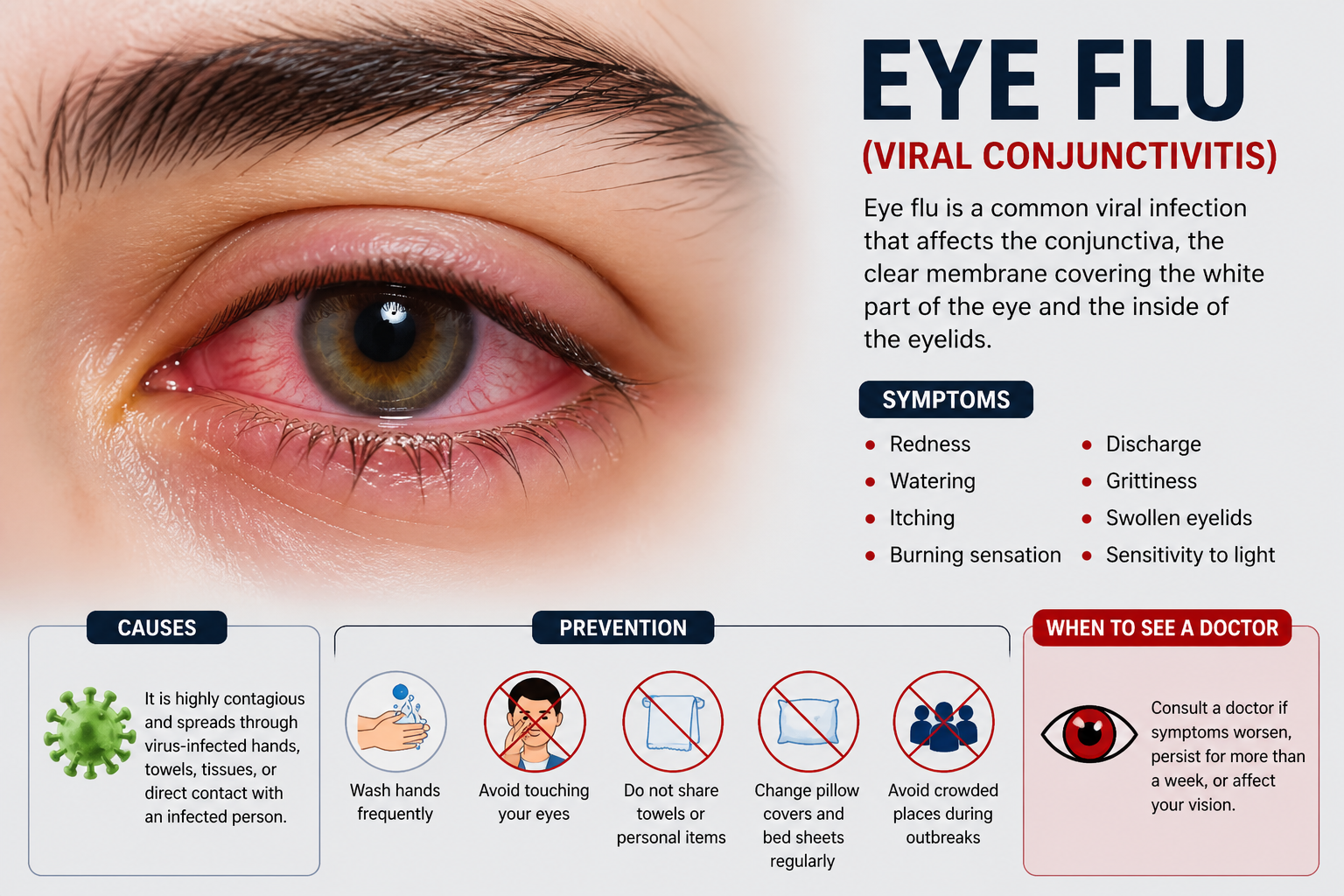
Most people know the name but not much beyond that. What happens is that a thin layer covering the white part of the eye gets infected or irritated. That layer is called the conjunctiva.
Now that might sound complicated but simply put, something irritates or infects that layer, and it gets inflamed. The eyes turn red and they turn watery. If not handled properly, it goes from one person to the entire household very quickly.
What Causes Eye Flu?
There is not just one cause. A few different things can trigger conjunctivitis.
1. Viral Infection
It is the most common one. This is the type that spreads the fastest. The same viruses that cause colds and fever can also cause eye flu. This is why during seasonal changes; eye flu cases go up everywhere.
2. Bacterial Infection
This one tends to produce more discharge from the eye. Yellow or greenish sticky discharge, especially in the morning, is usually a sign of bacterial conjunctivitis.
3. Allergies
Allergies are another trigger. Dust, smoke, pollen, certain cosmetics, the eyes can react badly to any of these depending on the person. This kind of conjunctive cannot be passed from one person to another.
4. Chemical Irritants
Chlorine in swimming pools is one example; strong fumes are another. These can make the eyes red and watery just like an infection would. But this type has nothing to do with viruses or bacteria. So, there is no risk of it spreading to anyone around.
Symptoms of Eye Flu to Watch For
The signs are usually quite clear and hard to miss once they show up.
The eyes turn red, this is usually the first sign.
Eyes starts getting watery that causes irritation.
A sticky discharge that collects at the corner of the eye. In bacterial conjunctivitis, this discharge is thicker and more yellow or green in color. In viral, it tends to be waterier.
Eyelids are stuck in the morning; this happens because of the discharge that dries overnight.
Buring sensations along with a feeling like something is stuck inside the eye even when nothing is there.
How badly it affects someone really depends on the person. Some people get through it with mild irritation and manage their day normally. Others find it quite difficult to do much at all because discomfort is constant. Either way, it should not just be left alone and hoped to go away.
How Does Eye Flu Spread Amongst Others?
Direct contact is the most obvious way it moves. Someone has an infection and touches around their eyes. Then the same hand touches something else or someone else directly. That is how it reaches the next person. Someone else touches the same things. Then without thinking, they rub their eyes. That is genuinely all it takes for the infection to move.
Sharing personal items is something people do without a second thought and that is where a lot of spreading happens. Towels, handkerchiefs, eye drops, kajal, contact lens cases, any of these can carry the infection from one person to another without it being obvious.
Then there is close contact with someone who is sneezing or coughing. Viral conjunctivitis often tags along with cold and fever symptoms. So just sitting near someone who is unwell can sometimes be enough.
Schools and offices are where it really picks up speed. Everyone is sitting close together, touching the same doors and desks and common areas. One person walks in with it and within a few days several people around them are dealing with the same thing.
How to Prevent Eye Flu from Spreading
Prevention does not need big changes. Just a little more attention to everyday habits that most people are already doing, just not carefully enough.
Washing hands well and doing it regularly is where it starts. This one habit alone can stop a lot of spreading from happening.
When someone at home has eye flu, personal items need to stay separate. Towels, pillowcases, eye drops, even with family members. Especially with family members actually, because that is where sharing happens most without thinking.
Surfaces, phones, door handles, these all become carriers if that step is skipped.
Anyone wearing contact lenses should switch to glasses until the infection is completely gone. Lenses sit directly on the eye and can make the irritation worse and also hold the infection.
Keeping the eye clean helps with comfort and also with recovery.
Swimming should be avoided completely during an active infection. Pool water can irritate the eye further and carry the infection to others by sharing the same water.
Treatment for Eye Flu
Viral conjunctivitis usually sorts itself out within a week to ten days. The body handles it but the discomfort in that time is real and there are things that help. Warm or cold compress on the eyes gives some relief. Cold works better for itching. Warm helps with discharge and swelling. Lubricating eye drops from a pharmacy give relief from dryness and irritation. No prescription is needed for that.
Bacterial conjunctivitis is a different situation. A doctor will look at it and prescribe antibiotic eye drops. These help clear it faster than waiting it out. Do not use someone else's eye drops or old prescriptions without consulting a doctor first.
Allergic conjunctivitis is handled differently. For allergic conjunctivitis, the approach depends on how bad the reaction is. Sometimes antihistamine drops are enough. Sometimes oral antihistamines are needed alongside.
When Should You Visit a Doctor?
Most cases are mild and settle on their own. But there are situations where a doctor's visit should not be delayed.
If the pain in the eye is severe and not just discomfort.
Vision is getting blurry or affected in any way.
The discharge is very heavy and thick.
Symptoms are not improving after a week.
If there is a high fever alongside the eye symptoms.
And if it is a newborn or a very young child with eye flu, that always needs a doctor.
If symptoms are going beyond mild discomfort, home management is not enough. Eye infections that are left alone too long can lead to complications that are completely avoidable. Getting it checked early is always a better call.
A Few Things to Avoid
Do not rub eyes even when they are itching badly. It makes things worse and spreads the infection faster.
Do not use kajal or eye makeup during an active infection. These can carry bacteria and worsen things.
Do not self-medicate with steroid eye drops. These are sometimes used for other eye conditions, but they can actually make conjunctivitis worse. Only use what the doctor prescribes.
Try not to wear any lenses until the doctor gives a thumbs up to it.
To Sum It Up
Eye flu is common; it spreads fast and most people do not take it seriously until it is already moving through everyone around them. The signs are easy to spot. Prevention is mostly about basic hygiene habits and in most cases treatment is straightforward.
But ignoring it, sharing personal items during infection, and going about normal routine without precautions is what causes it to spread so widely. Stay alert when the season changes. If the eyes start feeling off, take it seriously early. And if someone around you has it, a little extra caution goes a long way.
FAQs
1. What is eye flu?
Eye flu is just another name for conjunctivitis. The eye gets infected, turns red, waters a lot, and produces discharge.
2. How does eye flu spread from one person to another?
Touching an infected eye and then touching your own. Using someone else's towel, kajal, or eye drops. Touching door handles or phones that an infected person uses. Any of these can pass it on without anyone realizing it.
3. How long does eye flu last?
Viral conjunctivitis takes about a week to ten days. Bacterial clears faster with the right eye drops. But ignoring it makes it last longer than it should have.
4. Can eye flu affect vision permanently?
Usually, it does not but handle it poorly or leaving it completely unattended is not a good idea. If vision starts feeling off or blurry, see a doctor.
5. Is eye flu the same for children and adults?
The infection itself is similar. But children spread it around much faster. And for very young children or newborns, a doctor should always be consulted without waiting.